
Introduction
The dismissal of "chemtrail" observations typically follows a predictable pattern: concerned citizens are told they're simply observing "contrails" — condensation trails formed by aircraft engine exhaust. The conversation ends there, with the implication that anyone questioning this explanation lacks basic scientific understanding.
But this dismissal relies on the public not examining the actual atmospheric science. When we apply the established physics of contrail formation to what millions of people observe daily, significant inconsistencies emerge. This article examines the documented science of condensation trails, the conditions required for their formation and persistence, and why the blanket "it's just contrails" explanation fails to account for observable phenomena.
The Science of Contrail Formation
How Contrails Actually Form
Condensation trails form through a well-understood physical process. When jet fuel combusts, it produces water vapor as a byproduct. This hot, humid exhaust mixes with the cold ambient air at altitude. If conditions are right, the water vapor condenses around particulates in the exhaust, forming ice crystals that become visible as a white trail.
The key factors for contrail formation:
- Temperature: Contrails require extremely cold temperatures, typically below -40°C (-40°F). This generally occurs at altitudes above 26,000 feet.
- Relative Humidity: The ambient air must contain sufficient moisture. Formation is governed by the "Schmidt-Appleman criterion."
- Atmospheric Pressure: The relationship between temperature, humidity, and pressure determines whether the threshold is met.
What the Science Says About Persistence
Short-lived contrails form when the atmosphere is relatively dry. The ice crystals sublimate within seconds to minutes. The trail dissipates quickly, typically within 30 seconds to 2 minutes.
Persistent contrails can form when the atmosphere is supersaturated with respect to ice — meaning the relative humidity exceeds 100% at those temperatures. In these conditions, ice crystals can persist and even grow.
This is established atmospheric science. The question is: does it explain what people are actually observing?
The Observational Problem
⚠️ What Millions of People Document Daily
Citizens worldwide report and photograph phenomena that don't align with the "just contrails" explanation:
1. Selective Persistence
Multiple aircraft flying at similar altitudes in the same airspace on the same day — yet some leave trails that dissipate within seconds while others leave trails that persist for hours and spread across the sky. If atmospheric conditions determine persistence, why would aircraft in close proximity exhibit dramatically different trail behavior?
2. Trails That Spread Into Haze
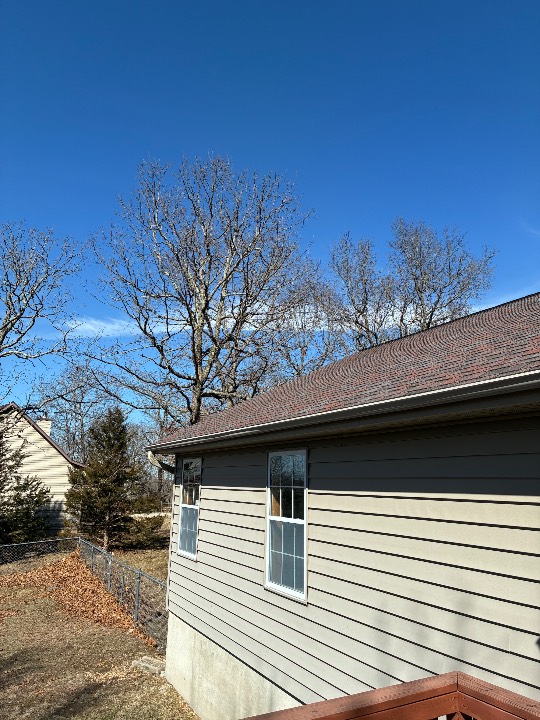
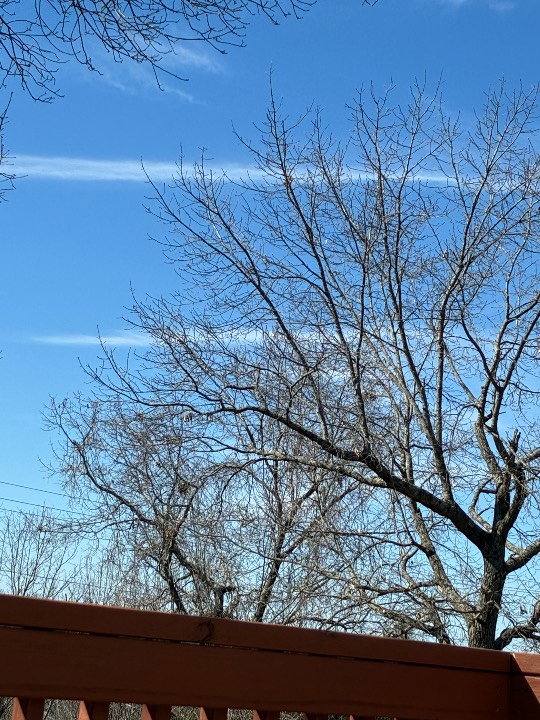
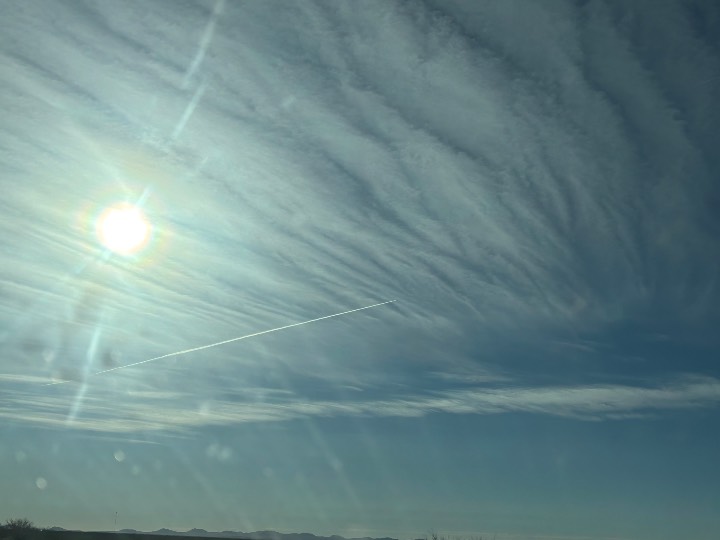
Normal contrails, even persistent ones, should maintain relatively defined edges as ice crystal formations. Yet observers document trails that spread laterally into diffuse, hazy sheets that eventually cover large portions of the sky — transforming clear blue skies into milky white overcast within hours.
This spreading behavior is consistent with aerosol dispersion, not ice crystal sublimation.
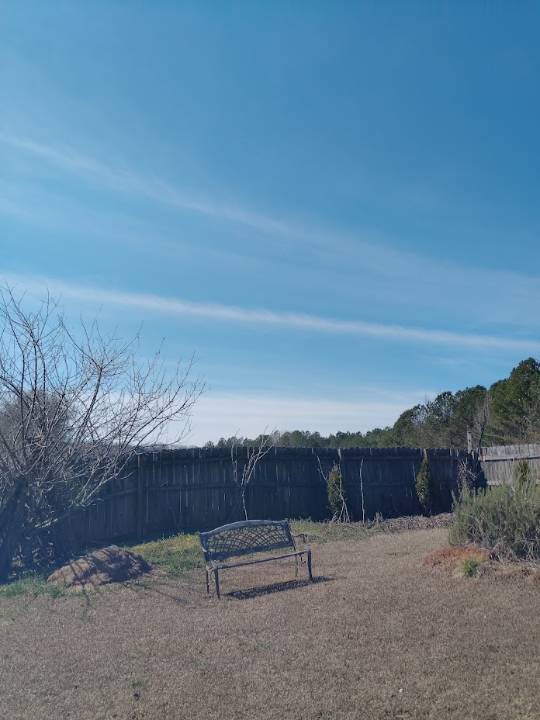
This visual spreading pattern is well-documented by observers worldwide. Rather than the crisp dissipation expected of ice crystal sublimation, these trails exhibit aerosol-like dispersion characteristics that warrant scientific examination.
3. Grid Patterns and Systematic Coverage
Observers document aircraft laying trails in apparent grid patterns, parallel lines, and cross-hatching formations over populated areas. Natural flight paths don't typically produce geometric patterns.
4. Non-Standard Flight Behavior
Aircraft are observed flying back and forth in patterns inconsistent with commercial routes, leaving persistent trails. Commercial aircraft fly from point A to point B. Aircraft engaged in coverage patterns suggest operational objectives beyond passenger transport.
The "It's Just Humidity" Explanation — Examined
Supersaturation Claims
The official explanation for persistent contrails relies on atmospheric supersaturation — regions where humidity exceeds 100% relative to ice. This explanation has problems:
- Scale and Duration: For persistent contrails to spread and cover large sky areas for hours, supersaturated conditions would need to exist continuously across vast atmospheric regions.
- Inconsistent Application: If the atmosphere is supersaturated enough to sustain trails for hours, natural cloud formation should occur independently of aircraft.
- Selective Persistence Unexplained: Supersaturation would affect all aircraft in a region similarly.
What We Know About Aircraft Aerosol Capabilities
Aircraft equipped for atmospheric aerosol release are not hypothetical:
- Cloud Seeding Aircraft: Operational worldwide, releasing silver iodide and other aerosol compounds
- Military Chaff: Aluminum-coated fibers routinely released for radar disruption
- Research Aircraft: Equipped with aerosol release systems for atmospheric studies
- Firefighting Aircraft: Release chemical retardants at scale
Given that aircraft-based aerosol delivery systems exist and are operational, weather modification programs are documented worldwide, and stratospheric aerosol injection is officially "under research" — is it unreasonable to question whether some persistent trails represent active aerosol release rather than passive engine byproducts?
The Questions That Remain
Questions the "just contrails" dismissal doesn't answer:
- Why do aircraft in similar conditions produce dramatically different trail behavior?
- Why do trails spread into haze sheets rather than sublimating as ice crystals should?
- Why do geometric patterns appear over populated areas?
- Why do trail-heavy days correlate with weather that deviates from forecasts?
- If contrail-induced cirrus is acknowledged to affect climate, why is concern dismissed?
- If stratospheric aerosol injection is "under research," what distinguishes research from unacknowledged operational programs?
Conclusion
The gap between contrail science and persistent trail observations isn't explained by "you don't understand meteorology." Atmospheric physics predicts specific contrail behavior under specific conditions. What millions observe doesn't consistently match those predictions.
This doesn't prove active aerosol programs. It proves that the "just contrails" explanation is incomplete.
The evidence suggests not that every trail is a "chemtrail," but that the categorical denial of any atmospheric modification program is inconsistent with observable reality and acknowledged capabilities. The documentation provided by citizens worldwide continues to grow, creating an archive that future researchers may find invaluable for understanding the true scope of atmospheric modification activities.
What you're seeing might be contrails. It might be something else. The point is: you're not wrong for asking.
Support Our Mission
ChemTrailMap will always be free. Your support helps us keep the servers running and continue building awareness tools for the community.
Donate $4.99/monthReferences
- Schumann, U. (1996). On conditions for contrail formation from aircraft exhausts. Meteorologische Zeitschrift.
- Appleman, H. (1953). The formation of exhaust condensation trails by jet aircraft. Bulletin of the American Meteorological Society.
- Minnis, P., et al. (2004). Contrails, cirrus trends, and climate. Journal of Climate.
- Burkhardt, U., & Kärcher, B. (2011). Global radiative forcing from contrail cirrus. Nature Climate Change.
- National Academy of Sciences. (2015). Climate Intervention: Reflecting Sunlight to Cool Earth.