

Introduction
The intersection of atmospheric science, climate intervention technologies, and weather modification has moved from theoretical research into active institutional consideration and, in some cases, operational deployment. This article examines documented evidence from government agencies, academic institutions, and international organizations regarding technologies that modify atmospheric and oceanic systems for climate purposes.
Rather than speculating about undisclosed programs, this analysis focuses on what institutions have officially acknowledged, researched, and in some cases, implemented. The evidence reveals a complex landscape where various forms of atmospheric intervention are not only being studied but actively discussed as necessary tools for climate management.
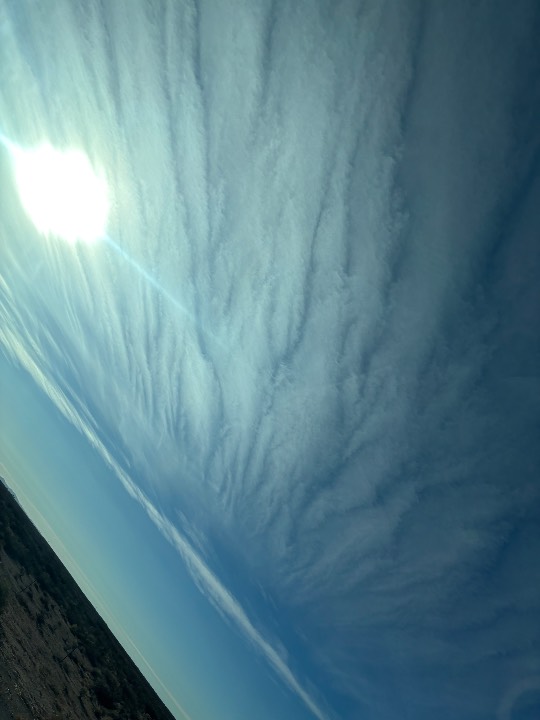
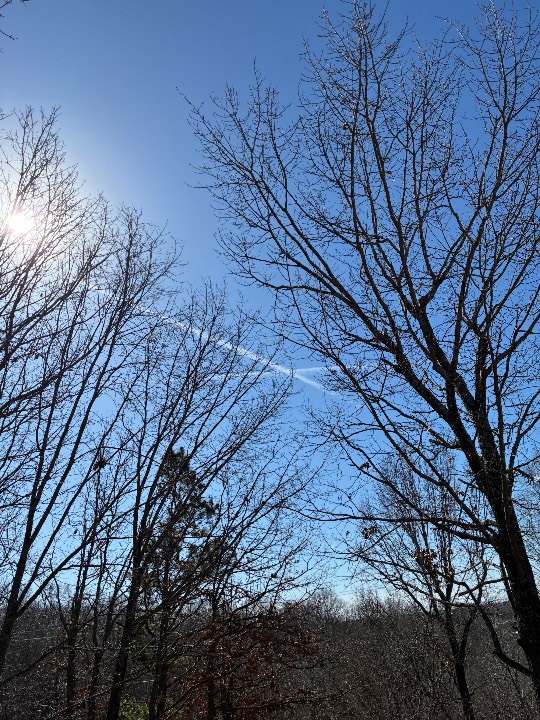
The documentation gathered by citizen observers around the world provides visual evidence of persistent atmospheric trails that often don't behave like typical contrails. These observations, combined with official institutional acknowledgments, paint a picture of active research and deployment in atmospheric modification technologies.
Institutional Acknowledgment of Climate Intervention
The IPCC Assessment: Legitimizing Geoengineering Research
The Intergovernmental Panel on Climate Change (IPCC) Sixth Assessment Report (2022) marks a significant shift in how climate intervention technologies are treated by the scientific mainstream. Working Group III's report dedicates substantial coverage to what it terms "carbon dioxide removal" (CDR) and briefly addresses solar radiation management (SRM).
Key findings from IPCC AR6 Working Group III include:
- Direct Air Capture (DAC) is assessed as a "key technology for ambitious climate change mitigation"
- Enhanced weathering using agricultural land could provide "large-scale CO2 removal"
- Ocean alkalinization and maritime transport for ocean liming are evaluated for CO2 removal potential
- Bioenergy with Carbon Capture and Storage (BECCS) is analyzed for delivering "carbon negative electricity, heat and hydrogen"


National Academy of Sciences: Official US Research
The National Academy of Sciences (NAS) 2015 report "Climate Intervention: Reflecting Sunlight to Cool Earth" represents direct US government-funded research into stratospheric aerosol injection. Co-funded by the CIA, NASA, NOAA, and other agencies, this study specifically recommended research into stratospheric aerosol injection techniques, governance frameworks for solar radiation management, and risk assessment for atmospheric intervention.
"Solar radiation management presents serious known and possible unknown risks, but also it presents the possibility of reversing some portion of climate change."
— National Academy of Sciences, 2015
Currently Operational Programs
China: The World's Largest Weather Modification Program
China operates the world's most extensive weather modification program, officially documented by the State Council. The program includes coverage targeting 5.5 million square kilometers by 2025, using cloud seeding with silver iodide, potassium iodide, and hygroscopic salts for agricultural support, drought relief, and air quality improvement.
This is not a covert program but an openly acknowledged state infrastructure project with published objectives and methodologies.
United States: Regional Weather Modification
According to Bureau of Reclamation records, the US currently operates approximately 70 active weather modification programs across multiple states. These programs focus primarily on precipitation enhancement for agricultural regions, drought mitigation, and hail suppression.
Research and Development Programs
Harvard Solar Geoengineering Research Program
Harvard's program represents institutional research into stratospheric aerosol injection. The Stratospheric Controlled Perturbation Experiment (SCoPEx) was designed to study aerosol behavior in the stratosphere, chemical interactions with ozone, and atmospheric transport mechanisms.
Enhanced Weathering Research
Multiple institutional research programs are studying enhanced weathering as a carbon removal technology, including large-scale field trials at the University of Sheffield, economic assessments at the Leverhulme Centre, and soil carbon sequestration studies at Yale University.
Historical Precedents
Operation Popeye (1967-1972)
Declassified US military documents reveal Operation Popeye, a cloud seeding program during the Vietnam War designed to extend monsoon seasons over the Ho Chi Minh Trail. This program demonstrates that military weather modification capabilities existed in the 1960s, large-scale atmospheric intervention was operationally feasible, and international concern led to the ENMOD Convention.
Key Conclusions
The evidence from institutional sources reveals:
- Institutional legitimacy: The IPCC, NAS, and other authoritative bodies treat climate intervention as scientifically valid and potentially necessary
- Current operations: Weather modification is already operational at scale in multiple countries
- Research infrastructure: Major universities and research institutions have active programs developing these technologies
- Policy preparation: Governance frameworks are being developed assuming eventual deployment
- Public preparation: Social research is being conducted to facilitate public acceptance
The transition from conspiracy theory to institutional policy appears to be complete. What remains is implementation, governance, and public engagement around technologies that are no longer hypothetical but increasingly inevitable components of climate policy.
Support Our Mission
ChemTrailMap will always be free. Your support helps us keep the servers running and continue building awareness tools for the community.
Donate $4.99/monthReferences
- IPCC, 2022: Climate Change 2022: Mitigation of Climate Change. Working Group III, Chapter 12.
- Anderson, K. and G. Peters, 2016: The trouble with negative emissions. Science, 354(6309), 182–183.
- Beerling, D.J. et al., 2020: Potential for large-scale CO2 removal via enhanced rock weathering. Nature, 583, 242–248.
- National Academy of Sciences, 2015: Climate Intervention: Reflecting Sunlight to Cool Earth.
- Royal Society, 2009: Geoengineering the climate: Science, governance and uncertainty.